Back to Programs
From Awareness to Action: Capacity Building for Inclusion
Empowering Strategic Inclusion
The core of the program centered on moving beyond passive awareness toward a "design-thinking" approach to accessibility.
Participants were guided through a curriculum designed to transform them from observers into active inclusion architects.
1. The "Designed Inaccessibility" Concept
* The session established that most environments are not inaccessible by accident, but by design.
* Volunteers learned that because barriers were created by human decisions, they can be dismantled through intentional redesign.
2. Identifying the Barriers
Participants were trained to spot three primary types of exclusion within their communities:
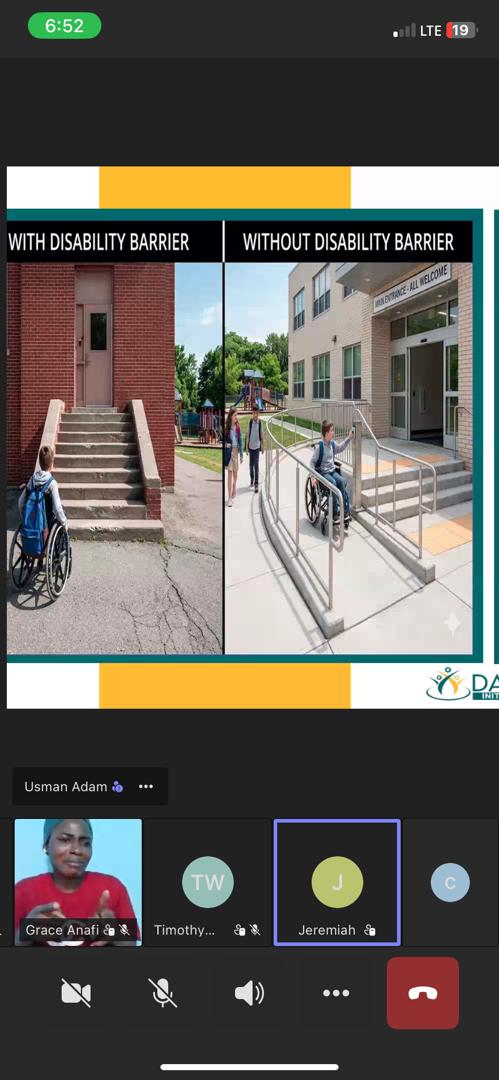
* Physical: Structural issues like stairs without ramps or narrow doorways.
* Attitudinal: The "unseen" barriers, such as low expectations or the belief that accessibility is "too expensive" or "too difficult".
* Institutional: Rules or standard practices that unintentionally leave people behind.
3. The A.C.T.I.O.N. Toolkit
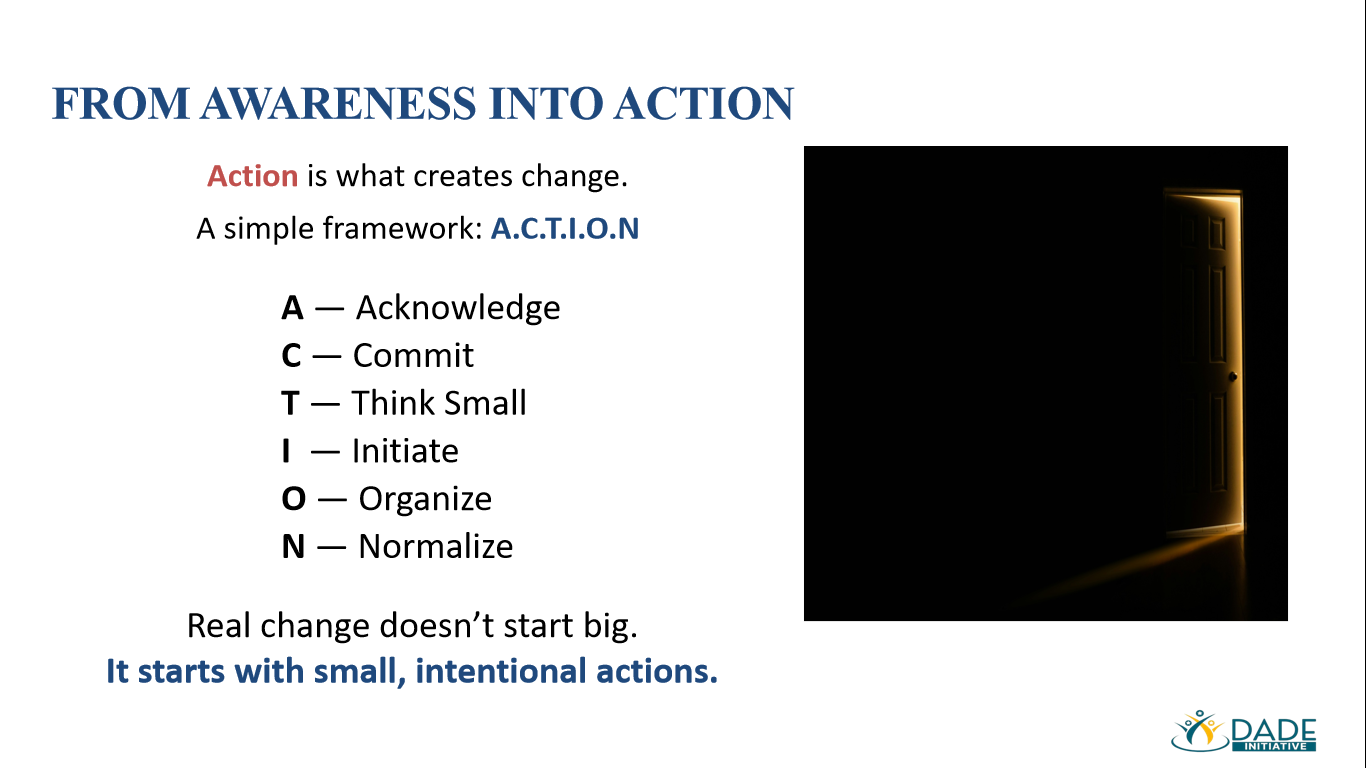
The practical highlight was the introduction of a six-step framework for solving accessibility issues:
Acknowledge: Openly recognizing a barrier without defensiveness.
Commit: Making a firm decision to address the identified problem.
Think Small: Focusing on immediate, low-cost, or "bite-sized" improvements rather than waiting for massive overhauls.
Initiate: Taking the first tangible step toward the solution.
Organize: Building a small coalition of peers or community members to support the change.
Normalize: Making these inclusive habits the "new normal" for all future DADE Initiative activities.
4. Commitment to Change
The program concluded with a practical challenge: every attendee committed to identifying one barrier in their current environment and applying the framework to address it within seven days.
This strategic approach ensures that DADE volunteers do not just understand the theory of inclusion, but possess the practical skills to implement it in real-time.
The core of the program centered on moving beyond passive awareness toward a "design-thinking" approach to accessibility.
Participants were guided through a curriculum designed to transform them from observers into active inclusion architects.
1. The "Designed Inaccessibility" Concept
* The session established that most environments are not inaccessible by accident, but by design.
* Volunteers learned that because barriers were created by human decisions, they can be dismantled through intentional redesign.
2. Identifying the Barriers
Participants were trained to spot three primary types of exclusion within their communities:
* Physical: Structural issues like stairs without ramps or narrow doorways.
* Attitudinal: The "unseen" barriers, such as low expectations or the belief that accessibility is "too expensive" or "too difficult".
* Institutional: Rules or standard practices that unintentionally leave people behind.
3. The A.C.T.I.O.N. Toolkit
The practical highlight was the introduction of a six-step framework for solving accessibility issues:
Acknowledge: Openly recognizing a barrier without defensiveness.
Commit: Making a firm decision to address the identified problem.
Think Small: Focusing on immediate, low-cost, or "bite-sized" improvements rather than waiting for massive overhauls.
Initiate: Taking the first tangible step toward the solution.
Organize: Building a small coalition of peers or community members to support the change.
Normalize: Making these inclusive habits the "new normal" for all future DADE Initiative activities.
4. Commitment to Change
The program concluded with a practical challenge: every attendee committed to identifying one barrier in their current environment and applying the framework to address it within seven days.
This strategic approach ensures that DADE volunteers do not just understand the theory of inclusion, but possess the practical skills to implement it in real-time.
Gallery