NIGERIA — The DADE Foundation officially launched its flagship 2026 legal literacy program, the highly anticipated three-part webinar series, "Know Your Power; Disability Rights Act Simplified (DRAS)," with a powerful opening session titled “Know Your Power: Stop the Gatekeepers in Schools and Workplaces.”
The webinar, which brought together students, job seekers, and HR professionals, focused on a singular, urgent mission: moving the Discrimination Against Persons with Disabilities (Prohibition) Act from a signed document to an enforced reality in Nigerian classrooms and boardrooms. Providing all with the legal vocabulary needed to challenge discrimination in education and employment.
Beyond Charity: The Law is Your Shield
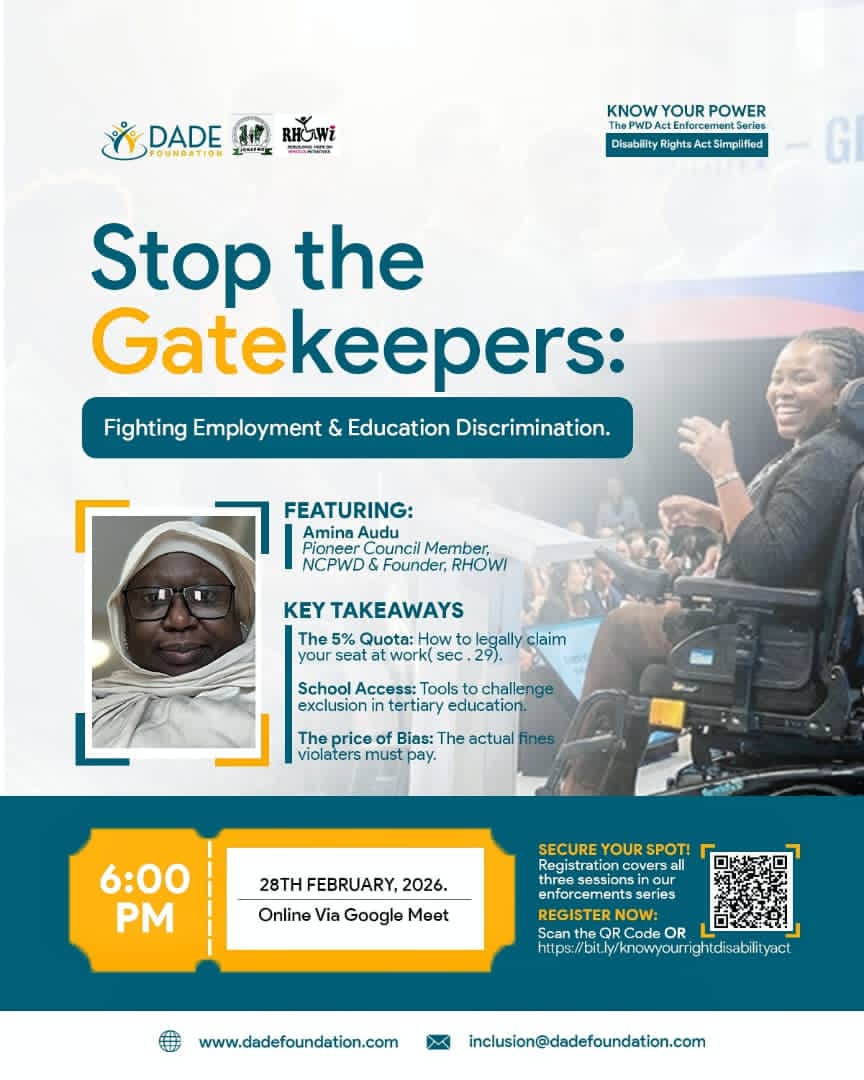
The session was facilitated by renowned advocate Amina Audu, a lecturer and founder of the Rebuilding Hope on Wheels Initiative. With over two decades of advocacy experience, Audu dismantled the "charity mindset," guiding participants through Sections 1, 17, 18, 28, and 29 of the 2018 Disability Act.
“We have to stop asking for permission to exist in professional spaces.” We are shifting from asking for favors to demanding our rights,” Amina told the virtual audience. “If a school rejects you or an employer ignores the 5% quota, they are not just being difficult, they are violating federal law.”
Key Masterclass Takeaways:
1.The 5% Quota Reality: A deep dive into Section 29, explaining exactly how public and private employers must reserve space for PWD talent.
2.Fighting Admission Barriers: Practical steps for students to challenge tertiary institutions that use disability as a ground for rejection.
3.The Manager’s Fine: A sobering reminder that under Nigerian law, principal officers of companies can be held personally liable and fined for discriminatory hiring practices.
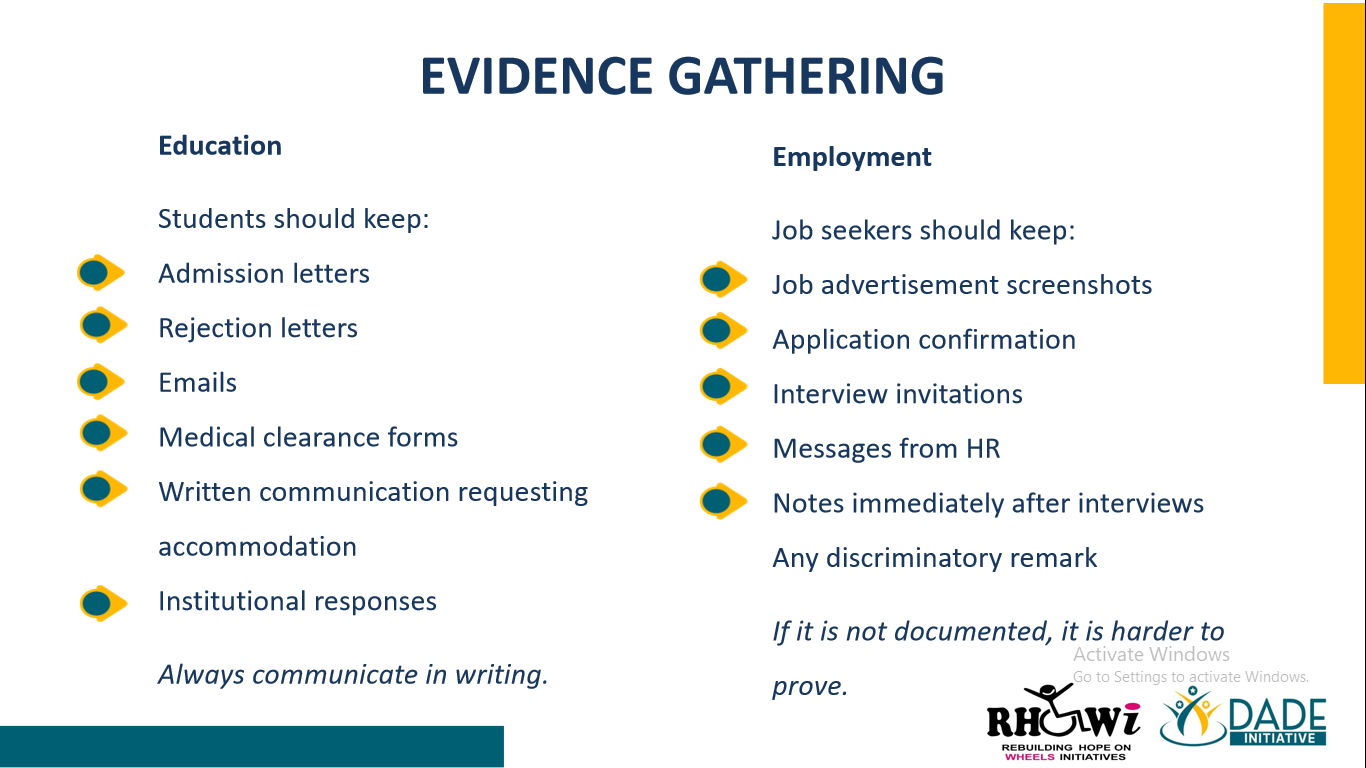
4.Strategic Documentation: Attendees were trained on "Evidence Gathering"—how to keep records of job advertisements, rejection emails, and interview notes to build a legal case for redress.
"If it isn't Documented, it didn't Happen"
The session concluded with a powerful interactive Q&A where participants shared personal experiences of facing "Gatekeepers." The consensus was clear: "If it isn't documented, it didn't happen." Attendees left with a "Self-Advocacy Toolkit," ready to cite the Act and protect their professional and academic futures.
DON'T MISS THE REST OF THE SERIES!
If you missed Session 1, you can still join us as we continue to simplify the Disability Rights Act and reclaim our power.
Part 2: Beyond the Ramp – A Masterclass on Navigating Physical Accessibility in Public Spaces.
Part 3: Justice & Redress – Your Step-by-Step Guide to Filing Formal Petitions and Seeking Legal Redress.
CLICK HERE TO REGISTER FOR THE REMAINING SESSIONS: https://bit.ly/knowyourrightdisabilityact
Join advocates already committed to ending discrimination in Nigeria.
The webinar, which brought together students, job seekers, and HR professionals, focused on a singular, urgent mission: moving the Discrimination Against Persons with Disabilities (Prohibition) Act from a signed document to an enforced reality in Nigerian classrooms and boardrooms. Providing all with the legal vocabulary needed to challenge discrimination in education and employment.
Beyond Charity: The Law is Your Shield
The session was facilitated by renowned advocate Amina Audu, a lecturer and founder of the Rebuilding Hope on Wheels Initiative. With over two decades of advocacy experience, Audu dismantled the "charity mindset," guiding participants through Sections 1, 17, 18, 28, and 29 of the 2018 Disability Act.
“We have to stop asking for permission to exist in professional spaces.” We are shifting from asking for favors to demanding our rights,” Amina told the virtual audience. “If a school rejects you or an employer ignores the 5% quota, they are not just being difficult, they are violating federal law.”
Key Masterclass Takeaways:
1.The 5% Quota Reality: A deep dive into Section 29, explaining exactly how public and private employers must reserve space for PWD talent.
2.Fighting Admission Barriers: Practical steps for students to challenge tertiary institutions that use disability as a ground for rejection.
3.The Manager’s Fine: A sobering reminder that under Nigerian law, principal officers of companies can be held personally liable and fined for discriminatory hiring practices.
4.Strategic Documentation: Attendees were trained on "Evidence Gathering"—how to keep records of job advertisements, rejection emails, and interview notes to build a legal case for redress.
"If it isn't Documented, it didn't Happen"
The session concluded with a powerful interactive Q&A where participants shared personal experiences of facing "Gatekeepers." The consensus was clear: "If it isn't documented, it didn't happen." Attendees left with a "Self-Advocacy Toolkit," ready to cite the Act and protect their professional and academic futures.
DON'T MISS THE REST OF THE SERIES!
If you missed Session 1, you can still join us as we continue to simplify the Disability Rights Act and reclaim our power.
Part 2: Beyond the Ramp – A Masterclass on Navigating Physical Accessibility in Public Spaces.
Part 3: Justice & Redress – Your Step-by-Step Guide to Filing Formal Petitions and Seeking Legal Redress.
CLICK HERE TO REGISTER FOR THE REMAINING SESSIONS: https://bit.ly/knowyourrightdisabilityact
Join advocates already committed to ending discrimination in Nigeria.
Gallery